Intro to Python
- ALL GRADES
- BEGINNER
- WEB
- 6 LESSONS
Answer Key
Module 2: Fuel Up
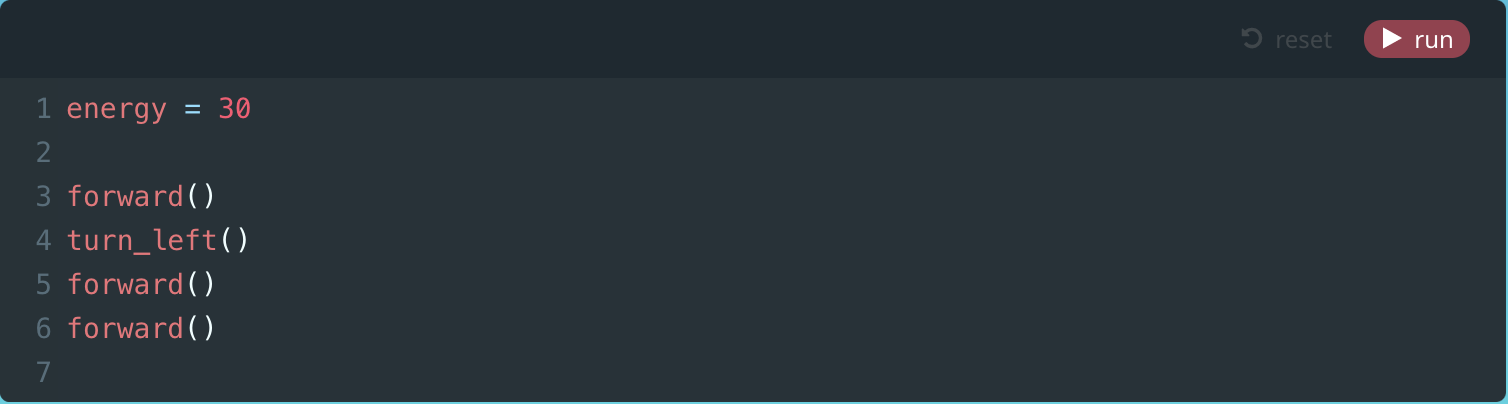
Module 3: Stockpile
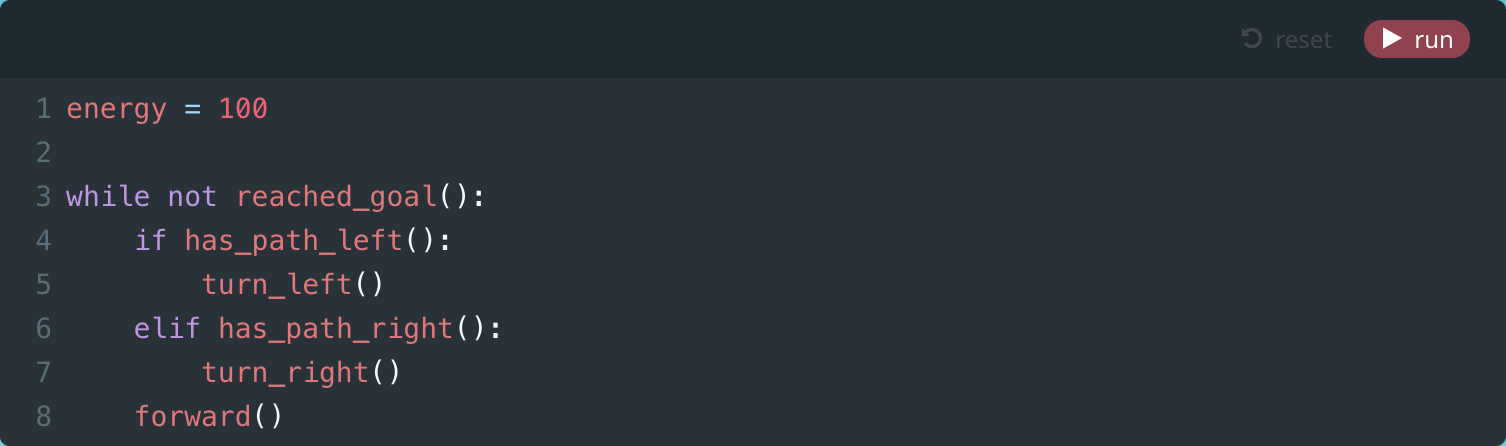
Module 4: Rocket Jump
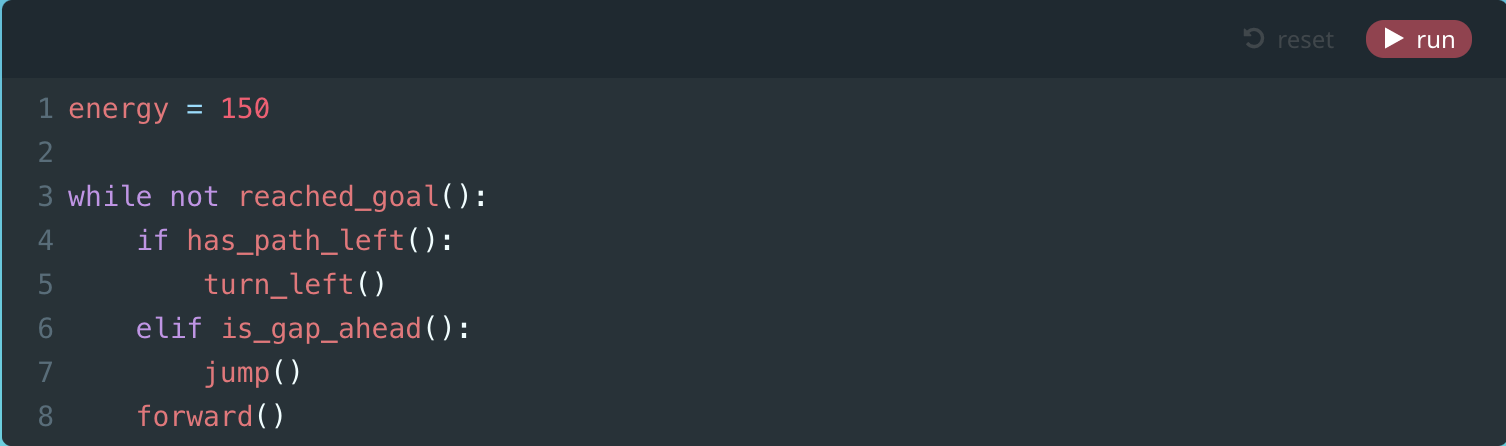
Module 6: Hack the Trap 1
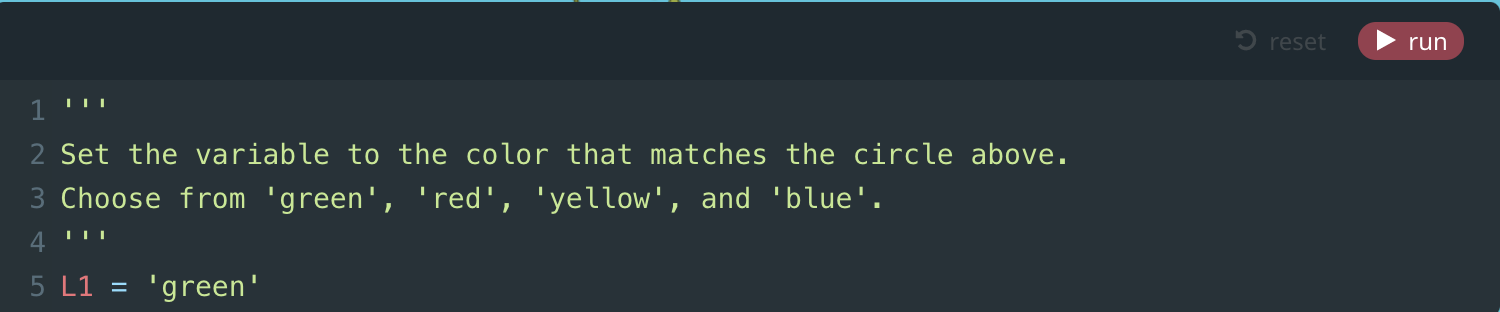
Module 8: Let Loose
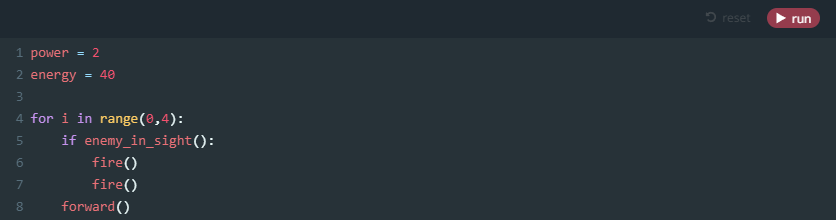
Module 9: It's a Toughie
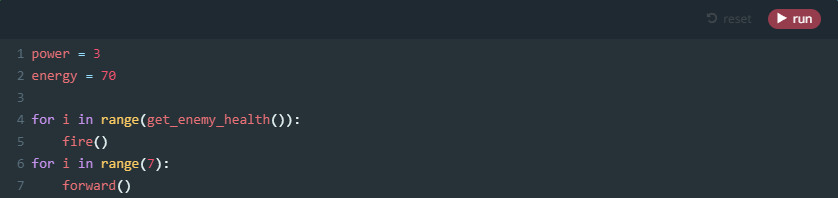
Module 10: Hack the Trap 2
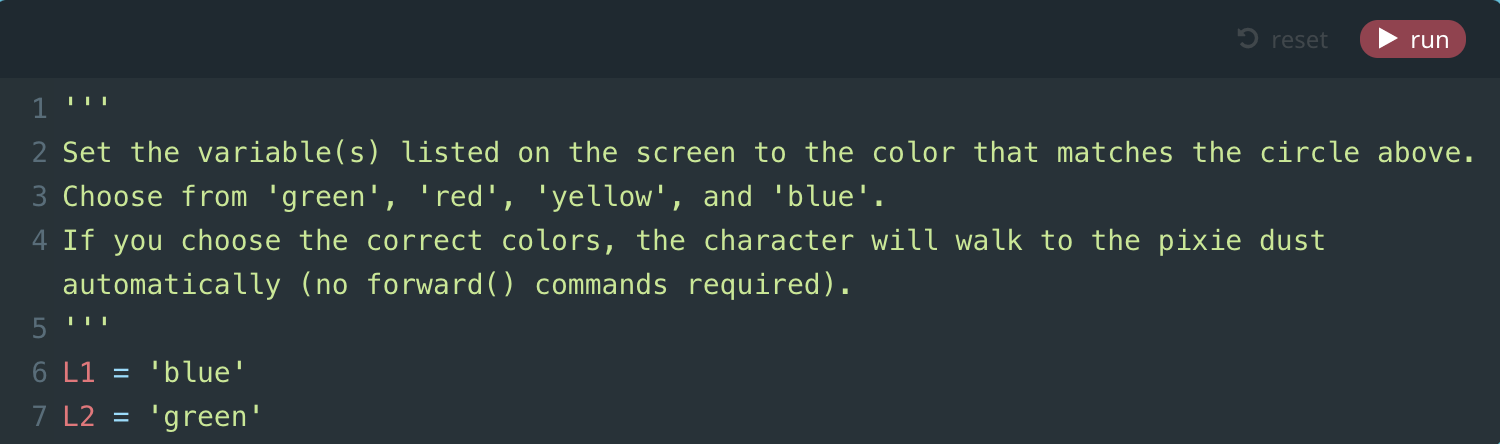
Module 11: Obstacle Course
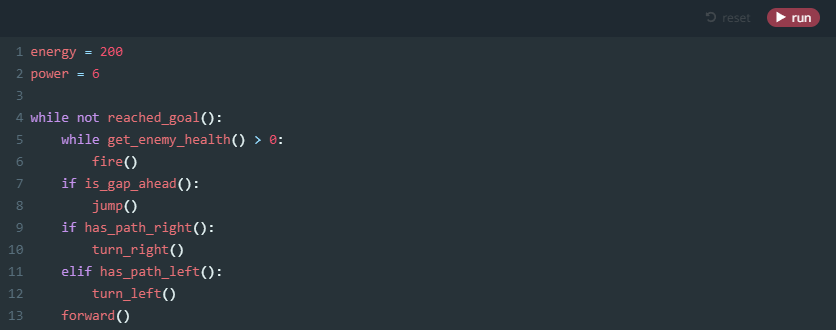
Module 13: Trickier Trap 1

Module 16: Trickier Trap 2
U.S. Standards
- CSTA: 3A-AP-17, 3B-AP-11, 3B-AP-12, 3B-AP-22
- CS CA: 9-12.AP.12, 9-12.AP.14, 9-12.AP.16
- ISTE: 1.1.c, 1.1.d, 1.4.d, 1.5.c
U.K. Standards
Key stage 3
Pupils should be taught to:- understand several key algorithms that reflect computational thinking [for example, ones for sorting and searching]; use logical reasoning to compare the utility of alternative algorithms for the same problem
- understand a range of ways to use technology safely, respectfully, responsibly and securely, including protecting their online identity and privacy; recognise inappropriate content, contact and conduct, and know how to report concerns
Key stage 4
All pupils must have the opportunity to study aspects of information technology and computer science at sufficient depth to allow them to progress to higher levels of study or to a professional career. Pupils should be taught to:- develop their capability, creativity and knowledge in computer science, digital media and information technology
- develop and apply their analytic, problem-solving, design, and computational thinking skills
- understand how changes in technology affect safety, including new ways to protect their online privacy and identity, and how to report a range of concerns
Variables
Variables
Learn about variable initialization, declaration, and more.
Description
Browser-based Python games! Students learn Python syntax, variables, functions, turtle graphics, and conditional logic and build classic games like Frogga and Brick Breaker.
Topics Covered: Python syntax, sequencing, repetition, conditional logic, nested loops, automation, pattern recognition, simple motion, keyboard and mouse events, pen drawing, operators, expressions, variables, Turtle graphics, using arrays and objects to store structured data.


What Students Learn
- Learn Python syntax
- Use conditional logic, loops, and conditional loops to solve problems
- Create and use variables
- Detect and handle keyboard and mouse events
- Write and interpret Python expressions
- Use pen drawing and Turtle graphics to draw shapes and display images
- Detect win/loss conditions in a game
- Implement collision detection between images
- Use arrays, dictionaries, and objects to store structured data
Technical Requirements
* Online courses require a modern desktop computer, laptop computer, Chromebook, or Netbook with Internet access and a Chrome (29+), Firefox (30+), Safari (7+), or Edge (20+) browser. No downloads required.
Lesson
3 : Variables
Python Game Design
Time: 50+ minutes
Introduction
Commands Introduced
Vocabulary
Objectives
Materials
Warm-Up (5 minutes)
Commands Introduced
Activities (45 minutes)
Facilitate as students complete all Variables modules on their own:
1. What are Variables? (Document)2. Fuel Up (Puzzle)
3. Stockpile (Puzzle)
4. Rocket Jump (Puzzle)
5. What are Strings? (Document)
6. Hack the Trap 1 (Puzzle)
7. How Do You Define Multiple Variables? (Document)
8. Let Loose (Puzzle)
9. It's a Toughie (Puzzle)
10. Hack the Trap 2 (Puzzle)
11. Obstacle Course (Puzzle)
12. What are Expressions? (Document)
13. Trickier Trap 1 (Puzzle)
14. What are Numbers? (Document)
15. What is Operator Precedence? (Document)
16. Trickier Trap 2 (Puzzle)
17. Variables Review (Document)
18. Expressions and Lists Review (Document)
Extended Activities (10 minutes)
You can not access this material with your current plan.
Class Presentations, Student Experience View, & Answer Keys are all included in our teacher plans!
Upgrade now to get access to our award-winning Tynker Curriculum.